Why Northeast India's Live Events Boom Is Different From the Rest of the Country
India's live events industry is booming. Here's how Northeast India's version of that boom from Guwahati to Agartala looks different from the metro story.
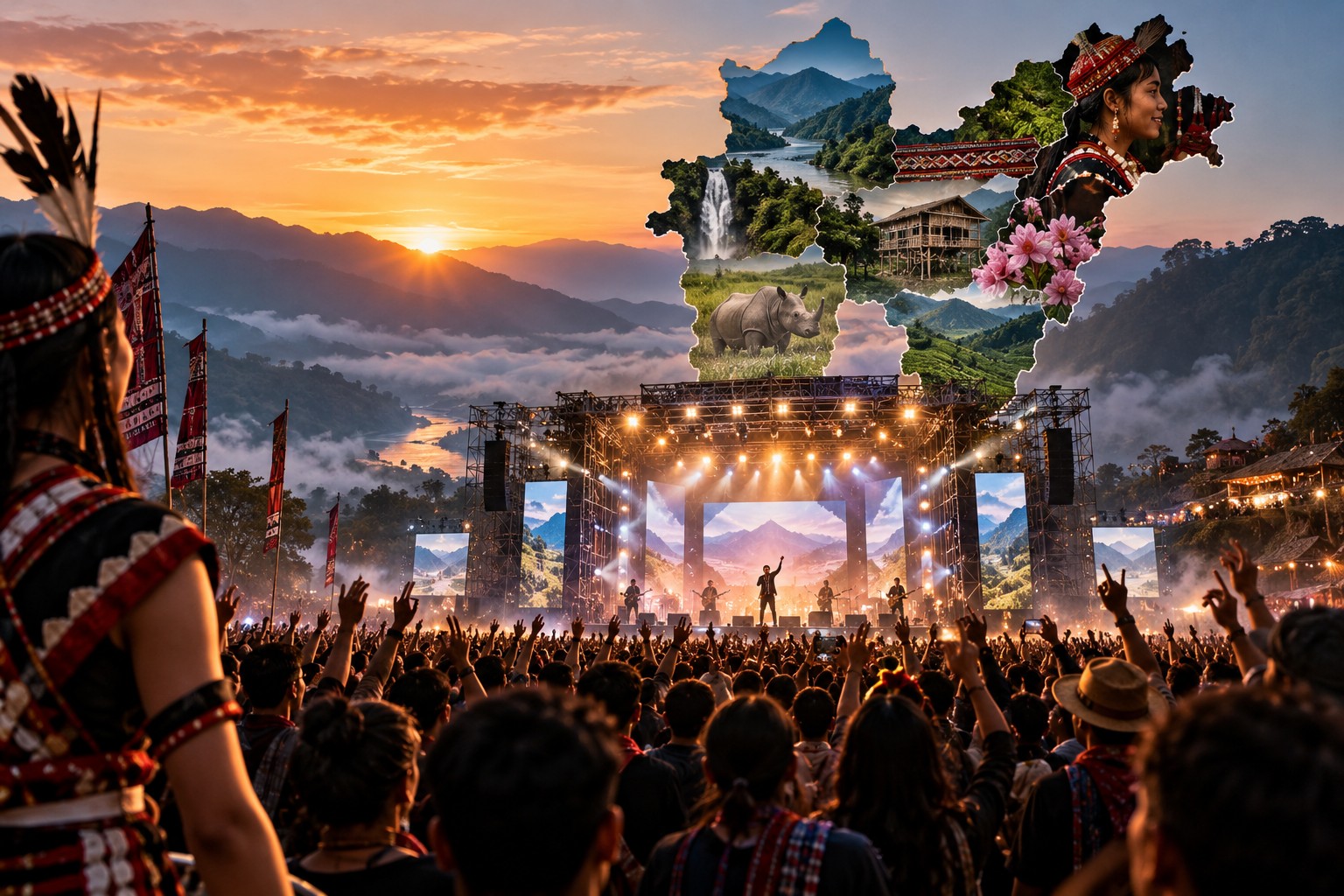
A boom that looks like a circuit, not a skyline Northeast India's version of this growth doesn't look like new stadiums going up in one city. It looks like a touring circuit stitched across seven states. In the last two years alone, shows have landed in Agartala and Udaipur and Belonia in Tripura, at a university campus in Kokrajhar, at Assam Downtown University in Guwahati, and at a gathering ground in Arunachal Pradesh a geographic spread that a single city boom simply doesn't produce. That spread matters because it changes who the "industry" actually is. In a metro market, the live events economy is dominated by large promoters competing for a handful of premium venues. In the Northeast, growth is coming from a mix of independently curated festivals, university and college circuits, and state hopping promotional tours often the same handful of organizers building relationships city by city rather than competing for one stage.
The clearest evidence of that shift toward scale: Guwahati's own BURPP Festival, returning for its 2026 edition on October 10 and 11 with hip-hop artist Divine headlining Day 1, is expected to draw more than 40,000 people over two days, according to regional reporting making it one of the largest independently curated festivals in the region's history.
Why the numbers travel differently here? A few things shape the Northeast's live events economy that don't show up in a national average: Terrain and weather set the calendar. Outdoor events cluster around dry-season windows, and logistics getting stage rigs, sound systems, and touring crews across hill roads and river crossings cost more time and money per show than a flat, well connected metro circuit. Campuses do more of the heavy lifting. College and university fests aren't a side category here; they're a meaningful chunk of the region's total concert calendar, functioning as both a talent pipeline and a reliable audience base in cities where standalone arena shows are still rare. The audience is younger, and more online, than the venue infrastructure suggests. Demand for live experiences is growing faster than premium venue capacity which is exactly the gap the FICCI-EY report flags nationally as a structural challenge, and one that's sharper in cities without a mature concert hall economy. None of this makes the Northeast's boom smaller than the national one. It makes it a different shape more distributed, more campus anchored, more dependent on organizers who understand the specific logistics of the region rather than a copy paste national playbook.
What comes next? The national Live Events Development Cell proposed in the FICCI-EY report aimed at reducing friction for organizers could matter more here than in markets that already have deep venue and vendor networks. Whether that translates into faster growth for the Northeast specifically is still an open question. What isn't in question is that the region's live events economy is no longer a footnote to the national story; it's running its own version of the same boom, on its own terms.